
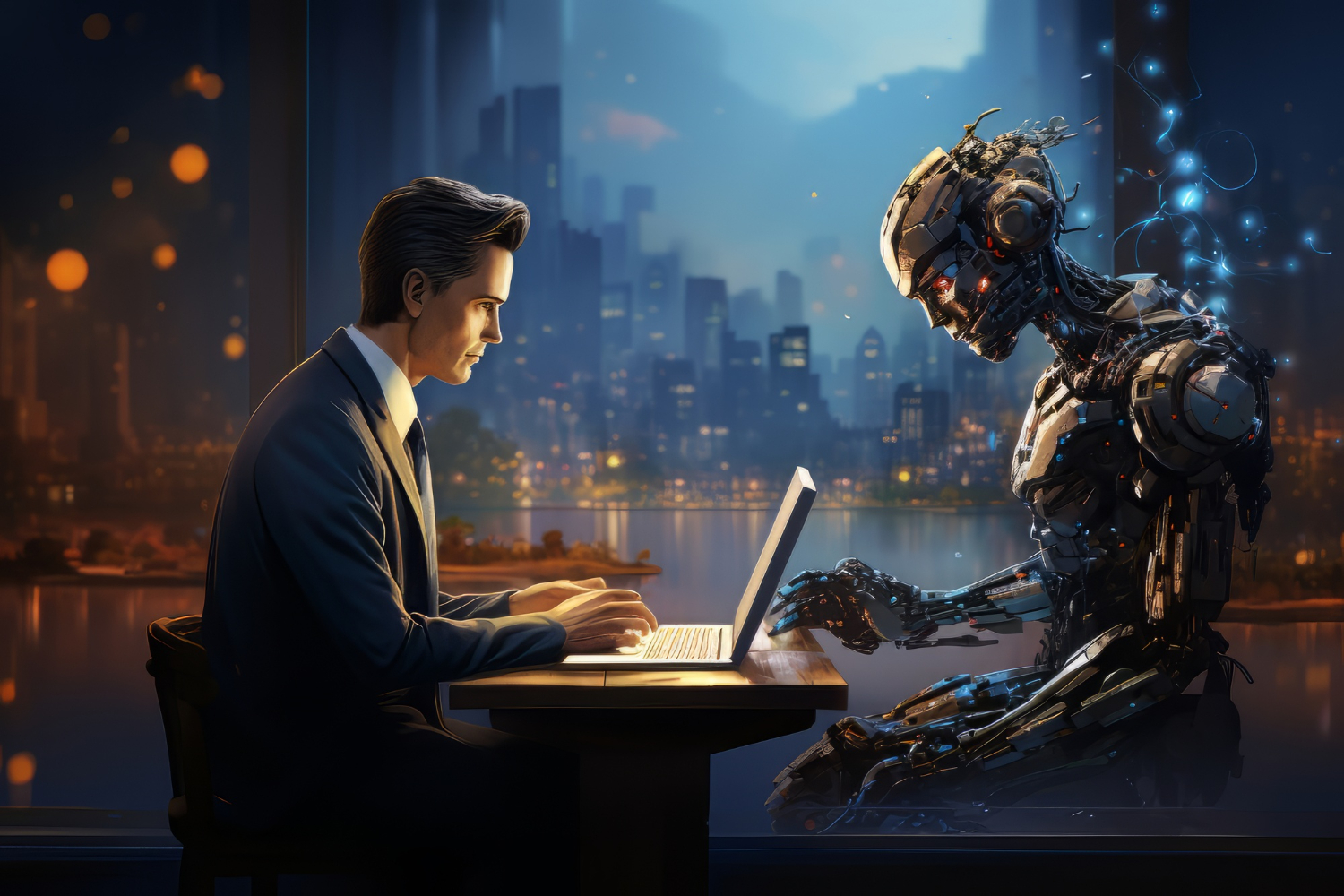
The rapid advancement of AI has led many people to question whether it will erode what makes us distinctly human. I’ve heard countless debates suggesting that as machines become more capable, our individuality and creativity might get overshadowed. But in my view, AI has the potential to do the opposite. Instead of reducing our humanity, it can highlight and enhance the very qualities that make us unique, our empathy, our creativity, our capacity for connection, and our ability to make meaning out of life.
Redefining Human Potential
Technology has always been a tool to extend human ability, from the invention of the wheel to the arrival of the internet. AI is no different in that sense, but the scale and speed at which it can transform our daily lives is unprecedented. Rather than seeing AI as a replacement for human ingenuity, I see it as a mirror that reflects what we can become. It frees us from repetitive, mechanical tasks so that we can focus on areas that require emotional intelligence, moral reasoning, and original thought.
I think about how automation in workplaces can remove the burden of routine paperwork, allowing professionals to invest more time in meaningful conversations with clients, patients, or colleagues. That shift in focus encourages deeper human relationships, which are at the core of our identity.
Elevating Creativity
Creativity is often thought of as a purely human trait. Yet, when AI generates art, composes music, or writes text, some argue that it blurs the boundary between human and machine expression. My perspective is that AI does not diminish creativity, it amplifies it. By taking on certain technical aspects or serving as a collaborative partner, AI can spark ideas we might not have conceived on our own.
For instance, writers can use AI to brainstorm concepts, explore alternative phrasings, or experiment with narrative structures. Musicians can use it to generate new harmonies or rhythms that push the boundaries of their genre. These tools don’t strip away originality; they expand the canvas on which we create. And ultimately, the decisions about what to keep, refine, or discard remain deeply human choices.
Enhancing Emotional Intelligence
Some believe that AI, being inherently logical and data-driven, can never touch the realm of emotion. But I see a different story unfolding. AI systems are being trained to recognize emotional cues in voice, text, and even facial expressions. While they cannot feel emotions in the way we do, they can help us respond to one another more effectively.
Consider healthcare, where doctors often struggle to balance the technical side of treatment with the emotional needs of patients. AI tools can process massive amounts of medical data, providing insights that free doctors to spend more time listening and empathizing with patients. That combination strengthens the bond between doctor and patient rather than weakening it. The same principle applies to customer service, education, and even personal relationships, AI can handle certain logistical or analytical tasks so that humans can invest more energy into understanding and connecting with one another.
Preserving Human Decision-Making
A common concern I hear is that as AI becomes more sophisticated, it may begin making decisions for us, thereby stripping away our autonomy. But I think the opposite is possible. AI can give us the tools to make more informed and thoughtful choices.
In policy-making, for example, AI can process vast amounts of social and economic data to highlight potential outcomes of certain decisions. Yet the ultimate decision should still rest with humans, who weigh not only efficiency but also ethics, fairness, and compassion. In personal lives, AI can help us track our habits, suggest healthier routines, or assist with financial planning. The final call, however, remains ours. In this way, AI becomes a partner in decision-making rather than a replacement for human judgment.
Deepening Human Connection
We often hear that technology isolates us. Social media, online shopping, and remote work have sometimes been blamed for weakening face-to-face interaction. But I’ve also seen how AI can be used to strengthen human bonds when applied with intention.
For example, translation systems allow people who speak different languages to connect more easily than ever before. Virtual assistants can help people with disabilities communicate or navigate environments more effectively. Even in mental health, AI-powered chatbots provide an entry point for people who might otherwise feel too vulnerable to reach out for help. While the chatbot itself is not the solution, it often acts as a bridge to deeper, more meaningful human support.
Encouraging Self-Reflection
Another way I’ve noticed AI making us more human is through self-reflection. Interacting with AI often forces us to clarify what we value most. If a machine can write poetry, what does that mean about the essence of human creativity? If AI can make complex predictions, what role does human intuition play? These questions push us to reconsider our strengths, our boundaries, and the aspects of ourselves that are irreplaceable.
I find that process healthy because it reminds us not to take our human qualities for granted. It prompts us to define what empathy, morality, and imagination truly mean. In doing so, we refine our sense of identity and our purpose in the world.
Supporting Lifelong Learning
One of the most exciting ways AI can make us more human is by supporting lifelong learning. It can tailor education to individual needs, making knowledge more accessible than ever before. I’ve seen people of all ages use AI-driven learning platforms to acquire new skills, pursue hobbies, or revisit subjects they once found too difficult.
This democratization of learning nurtures curiosity, adaptability, and resilience, traits that are deeply human. It reminds me that our capacity to grow and learn is one of the qualities that truly sets us apart, and AI can play a role in unlocking that potential.
Keeping Humanity at the Center
Of course, none of this happens automatically. AI can just as easily be used in ways that exploit, manipulate, or dehumanize. That’s why I believe it is essential to keep humanity at the center of AI development. Ethical frameworks, transparent practices, and ongoing dialogue are all necessary to ensure that technology serves our highest values rather than undermines them.
What excites me most is that this is a choice. We are not passive observers of AI’s trajectory. We are the architects of how it integrates into our lives. By actively shaping its role, we can ensure that AI amplifies empathy, creativity, and wisdom instead of eroding them.
A Future That Looks More Human
As I reflect on the path ahead, I don’t see a future where AI makes us obsolete. I see a future where AI highlights our uniqueness. Machines can analyze data and recognize patterns, but they cannot replicate the fullness of the human experience. They cannot love, grieve, dream, or imagine in the way we can.
AI, in its best form, pushes us closer to those distinctly human experiences by removing distractions and expanding possibilities. It becomes less about competing with machines and more about embracing what only we can do.
Conclusion
AI is often framed as a force that might reduce our humanity, but I believe it can help us become more fully human if we guide it thoughtfully. It can free us from monotony, spark creativity, enhance empathy, and deepen human connections. It can act as a mirror that forces us to reflect on who we are and what matters most.
In the end, the question is not whether AI will make us less human, but whether we are willing to use it as a tool to make us more human. That responsibility lies with us, and I believe it is one of the most important choices we will make in this era of technological change.
