
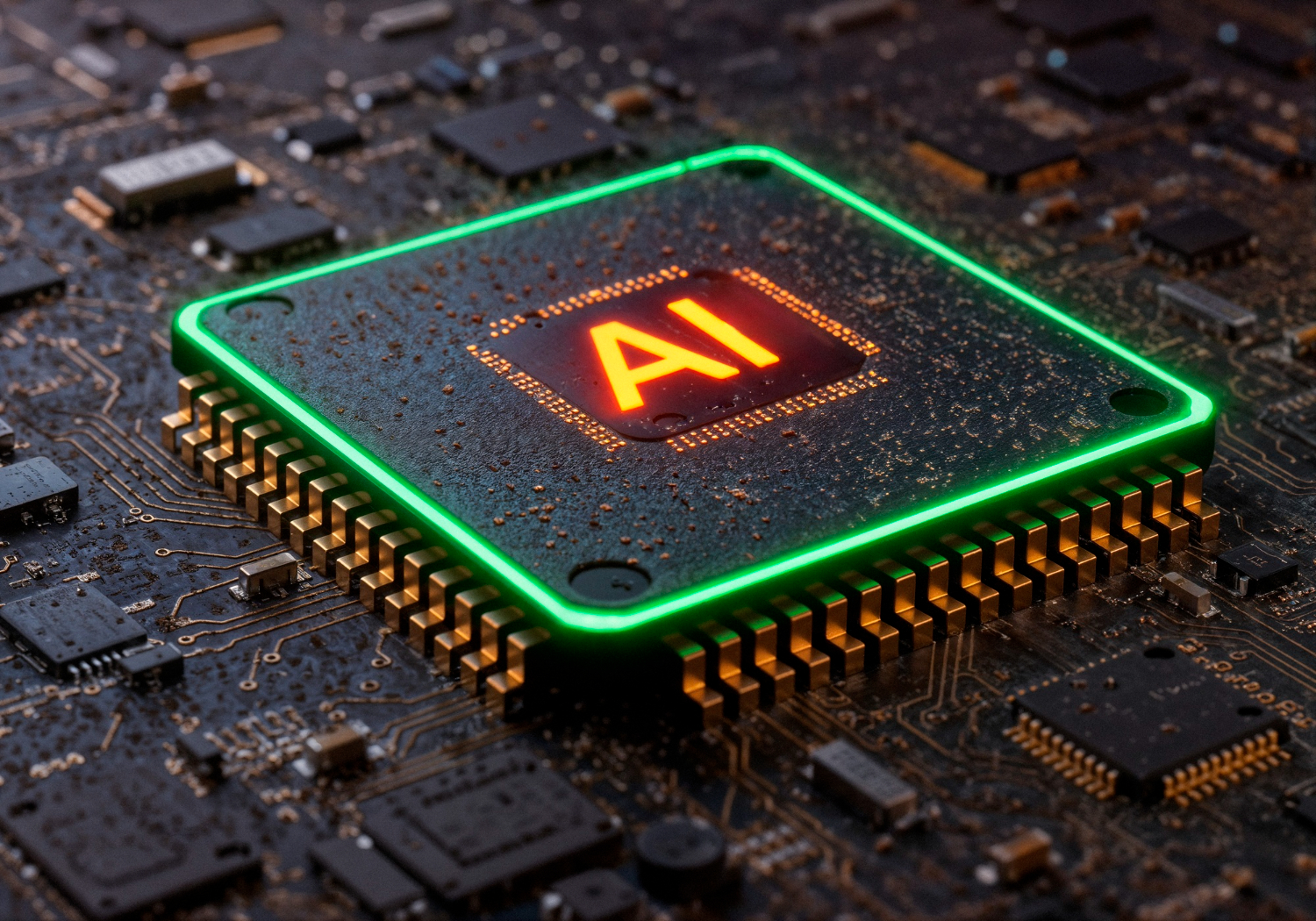
NVIDIA has been setting the pace in the artificial intelligence hardware race for years, but its latest chips have raised the bar in ways I didn’t expect. The company has not only pushed performance boundaries but also redefined what scalability, efficiency, and accessibility mean for the broader ecosystem of AI researchers, developers, and enterprises. As I look at these new chips, I can’t help but see them as a bold statement of intent: NVIDIA wants to remain the undisputed leader in high-performance AI computing.
The Shift in AI Hardware Innovation
AI development has always been a mix of software brilliance and hardware power. While advanced algorithms make progress possible, they would remain theoretical without the muscle of powerful chips to support them. NVIDIA’s new line of chips has made it clear that hardware innovation is not just about faster GPUs, but about optimizing how large-scale models are trained and deployed.
From what I’ve seen, the emphasis has shifted from raw processing speed to a combination of speed, energy efficiency, and integration with complex AI workflows. The company is positioning these chips as more than just components; they’re the foundation of a larger ecosystem that includes data centers, cloud infrastructure, and edge applications.
Breaking Performance Records
The new chips have shattered multiple performance benchmarks across training and inference workloads. Large-scale AI models, which used to take weeks to train, are now being completed in significantly shorter timeframes thanks to NVIDIA’s architecture upgrades. The numbers alone are staggering, but what stands out to me is how these results translate into practical use cases.
Companies developing next-generation applications, whether in natural language processing, computer vision, or generative models, are reporting drastic improvements in throughput and scalability. For researchers, this means more room to experiment with models that previously felt too resource-heavy. For businesses, it opens the door to AI solutions that can deliver results in real time, without bottlenecks that delay innovation.
Energy Efficiency and Sustainability
One of the biggest challenges in AI development is balancing performance with sustainability. Data centers already consume massive amounts of energy, and scaling up AI workloads only adds to the pressure. NVIDIA’s new chips have shown impressive improvements in power efficiency, making them attractive not just for their raw performance but also for their ability to reduce operating costs.
What really struck me was how the company seems to have prioritized energy optimization without compromising on power. By fine-tuning architecture and leveraging new cooling strategies, NVIDIA has managed to cut down on wasted energy. In a world where enterprises are increasingly being held accountable for their carbon footprint, this step makes a huge difference.
Architectural Advancements
Behind these performance gains is a redesigned architecture that focuses on parallel processing, memory bandwidth, and integration with high-speed networking technologies. This architectural evolution makes it possible for the chips to handle enormous datasets and complex model computations at scale.
I find it fascinating how NVIDIA continues to improve the balance between compute density and heat management. Packing more processing cores into a chip can easily backfire if the thermal design can’t keep up, but the company has clearly thought this through. It feels like each iteration of their chips gets smarter about how resources are allocated and optimized for real-world workloads.
AI Training at Scale
Training large AI models has always been one of the most resource-intensive aspects of machine learning. With these new chips, NVIDIA has reduced training times significantly, enabling models with billions of parameters to be trained faster and more efficiently.
This matters to me because it means researchers and developers can accelerate their cycles of innovation. Instead of waiting weeks for results, they can iterate quickly, test hypotheses, and refine models without hitting bottlenecks. The chips are essentially cutting down the trial-and-error barrier that has long slowed down AI progress.
Expanding Access for Businesses
While the top-tier performance numbers naturally grab attention, what I find equally important is how NVIDIA is making this technology available across different market segments. Large enterprises and hyperscale data centers will obviously benefit, but smaller organizations are also gaining access through cloud providers who integrate these chips into their offerings.
That shift is democratizing AI in a meaningful way. Businesses that could never afford the infrastructure to run cutting-edge models on their own hardware can now tap into NVIDIA-powered cloud solutions. This is helping level the playing field, giving startups and mid-sized companies the same tools as industry giants.
Real-World Applications
The impact of these chips extends beyond theoretical benchmarks. Industries ranging from healthcare to autonomous vehicles are already seeing results. In healthcare, AI-powered diagnostic tools are becoming more accurate as training datasets grow, and NVIDIA’s chips are accelerating the pace at which those models are trained.
In autonomous driving, where real-time decision-making is critical, the speed and reliability of inference powered by these chips can make the difference between success and failure. Meanwhile, in finance, companies are processing massive streams of market data to make predictions and decisions at unprecedented speeds.
Software Ecosystem Integration
Another strength of NVIDIA’s strategy is its software ecosystem. The new chips are not designed in isolation; they are meant to integrate seamlessly with CUDA, TensorRT, and other NVIDIA platforms that developers already rely on. From my perspective, this makes the transition smoother for organizations looking to upgrade their infrastructure.
Having hardware that aligns with a robust software stack means developers spend less time worrying about compatibility issues and more time pushing their applications forward. It also creates a lock-in effect, where once companies invest in NVIDIA’s ecosystem, they’re likely to keep building on it.
Competition in the AI Hardware Race
Of course, NVIDIA is not the only player in the AI hardware space. Companies like AMD, Intel, and Google are all pushing their own solutions. Yet, the sheer momentum NVIDIA has generated with these new chips puts them ahead in terms of performance benchmarks and industry adoption.
I see the competition as healthy for the field as a whole. The race forces every company to push harder, innovate faster, and address the limitations of their previous generations. At the moment, though, NVIDIA’s leadership feels solid, especially when you consider their established partnerships across industries.
The Future of AI Hardware
Looking ahead, I think we’re only scratching the surface of what these chips can enable. As models grow more complex and applications expand into new domains, the need for high-performance, efficient hardware will only increase. NVIDIA’s commitment to continuous improvement suggests that we’ll see even more groundbreaking advancements in the coming years.
For me, the real question is how quickly the ecosystem can adapt to leverage these capabilities. The chips are clearly powerful, but realizing their full potential will require developers, researchers, and businesses to rethink how they build and deploy AI solutions.
Conclusion
NVIDIA’s new AI chips have done more than break performance records; they’ve redefined expectations for what’s possible in artificial intelligence. By combining raw processing power with efficiency, scalability, and ecosystem support, the company has strengthened its position at the forefront of the AI revolution.
From accelerating model training to making high-performance AI more accessible through the cloud, these chips are driving innovation across industries. I see them not just as a technological leap, but as a signal that the future of AI will be shaped as much by hardware breakthroughs as by software innovation.
In my view, NVIDIA has once again proven why it remains the leader in this field. The chips represent a bold step forward, and the ripple effects of their release will be felt in every corner of the AI landscape for years to come.
