
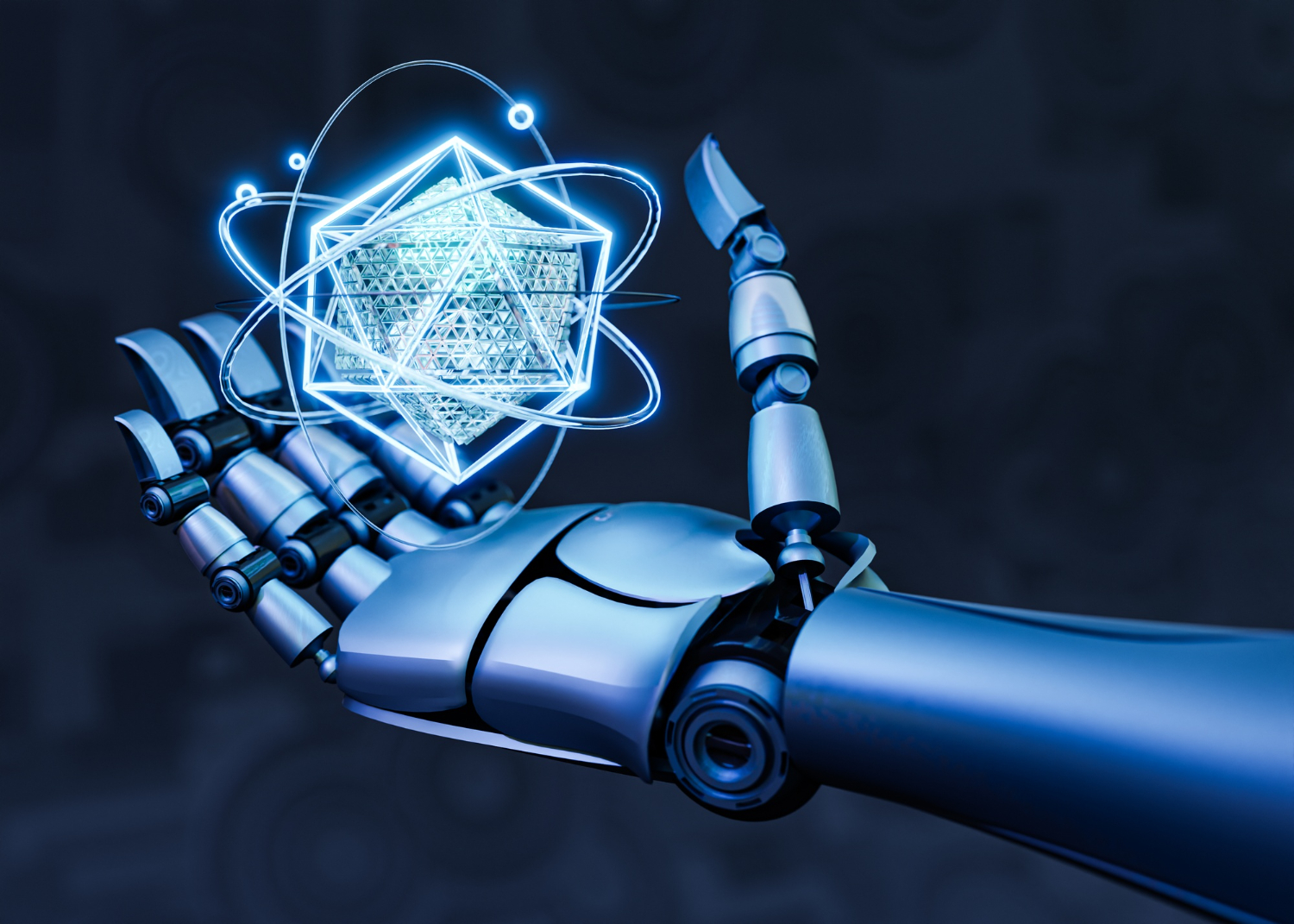
Quantum computing and AI are two of the most revolutionary technologies shaping our century, and the thought of them intersecting has sparked excitement across science, technology, and industry. I see this convergence as more than just a speculative idea; it is gradually becoming a reality as research teams and companies experiment with algorithms and hardware that could fundamentally transform how we think about intelligence, computation, and decision-making. The blend of quantum mechanics with artificial intelligence is not merely a futuristic concept, but a pathway that could redefine efficiency, scalability, and problem-solving in ways that classical systems cannot achieve.
The Foundations Of Quantum Computing
Quantum computing builds on principles of quantum mechanics, which describe the behavior of matter and energy at microscopic scales. Unlike classical computers that operate on bits, which can only exist as 0s or 1s, quantum computers use qubits. A qubit can exist as 0, 1, or both simultaneously through superposition. This property, along with entanglement, enables quantum processors to perform operations on an astronomical number of possibilities at once.
What makes this remarkable to me is how quantum computing challenges traditional limits. A problem that might take a supercomputer years to calculate could, in theory, be solved by a sufficiently powerful quantum processor in seconds. The sheer scale of parallelism means we can imagine breakthroughs in areas such as material science, cryptography, drug discovery, and optimization problems.
While the hardware is still experimental and error-prone, steady progress has been made by institutions like IBM, Google, and startups building quantum devices. The introduction of cloud-based access to small-scale quantum computers has opened doors for researchers around the globe to test algorithms and explore practical applications. This sets the stage for AI to become one of the most promising beneficiaries.
The Role Of AI In Modern Technology
AI has already demonstrated its transformative potential across industries. From natural language processing to computer vision, from predictive analytics to robotics, AI models thrive on vast amounts of data and computational resources. Training deep neural networks requires immense processing power, often relying on specialized hardware like GPUs and TPUs.
The limitation I see is that even the most powerful classical systems can reach bottlenecks when the scale of the data or the complexity of the models grows beyond manageable levels. As algorithms become more advanced and datasets expand, the hunger for computational efficiency grows, making it harder to balance speed, cost, and accuracy.
This is where quantum computing offers a new frontier. By leveraging quantum principles, AI models might achieve higher efficiency in training, inference, and optimization tasks that today demand extraordinary resources.
How Quantum Computing Enhances AI
The interaction between quantum computing and AI is not simply about making AI faster. It’s about reshaping the way algorithms are built and executed. Quantum computing can introduce new classes of algorithms that fundamentally outperform classical counterparts in specific tasks.
For example, optimization problems, which are central to many AI applications, can be approached more effectively with quantum methods. Whether it is route planning for logistics, portfolio optimization in finance, or energy distribution in smart grids, AI often struggles with problems that require evaluating countless possibilities. Quantum algorithms can evaluate these possibilities in parallel, potentially providing better solutions in less time.
Another promising direction is machine learning. Quantum machine learning leverages the unique properties of qubits to represent and manipulate high-dimensional data more efficiently. This could allow AI models to process complex datasets that are currently impractical for classical hardware.
I find the idea of quantum-enhanced pattern recognition particularly fascinating. Tasks such as analyzing genetic sequences, interpreting climate data, or detecting fraud involve subtle patterns buried in immense datasets. Quantum approaches may enable us to uncover these patterns with greater speed and precision.
Challenges To Overcome
Despite the enthusiasm, merging quantum computing and AI is not straightforward. Quantum hardware is still in its infancy, with fragile qubits prone to noise and errors. Building stable, large-scale quantum systems remains one of the toughest engineering challenges of our time.
Even if hardware matures, designing quantum algorithms for AI tasks requires a deep understanding of both quantum mechanics and machine learning theory. The talent pool that can bridge these domains is limited, and developing user-friendly tools will take time.
Cost is another barrier. Current quantum computers are expensive to build and maintain, requiring extreme conditions like near-absolute-zero temperatures. While cloud access has made small systems available, large-scale adoption will depend on cost-effective solutions.
As I see it, the excitement around quantum-AI convergence must be tempered with realism. Progress is being made, but it will likely take years before we see widespread deployment in practical industries.
Industry Applications On The Horizon
Even with the challenges, early applications of quantum-enhanced AI are already being explored. In pharmaceuticals, companies are investigating how quantum computing could accelerate drug discovery by simulating molecular interactions more accurately. Combined with AI, this might shorten the timeline for developing new treatments.
In finance, quantum algorithms could help optimize investment strategies by analyzing massive datasets of market trends and risk factors. AI already plays a big role in predicting market behavior, and adding quantum computing could refine these predictions further.
Transportation and logistics also stand to benefit. Optimizing delivery routes, managing traffic flow, and predicting maintenance for vehicles are computationally intensive tasks. With quantum computing supporting AI, these operations could become more efficient and cost-effective.
Cybersecurity is another crucial domain. AI helps identify threats and vulnerabilities in digital systems, but cyberattacks are evolving at a rapid pace. Quantum computing could boost threat detection by analyzing more variables in real time. However, it also poses risks, since quantum decryption methods could undermine current encryption standards. This makes the convergence of quantum and AI a double-edged sword in the cybersecurity arena.
The Ethical And Social Dimension
The marriage of quantum computing and AI does not only raise technical questions but also ethical ones. If these technologies achieve their potential, the balance of power in industries and nations could shift dramatically. Those with access to quantum-AI capabilities might gain significant advantages in economics, defense, and scientific research.
I believe we must also think carefully about fairness, transparency, and accountability. AI systems already raise concerns about bias and decision-making. If quantum-enhanced AI accelerates the complexity of models beyond human comprehension, ensuring accountability will become even more difficult.
There are also societal implications. Entire industries could be disrupted by the speed and efficiency of quantum-AI systems, affecting employment, education, and governance. Preparing for these shifts will require proactive policies and global cooperation.
A Future To Anticipate
While much of the current excitement about quantum computing and AI remains in research labs, the trajectory suggests that real-world applications are not too far off. Incremental advancements in both hardware and algorithms are building momentum toward practical breakthroughs.
What inspires me is the potential to solve problems that today seem unsolvable. From tackling climate change by modeling complex ecosystems to advancing personalized medicine, the possibilities expand dramatically once these technologies align.
I see this convergence not as a single moment where everything changes overnight, but as a gradual transformation. Step by step, the integration of quantum computing and AI will seep into industries, research, and even daily life.
Conclusion
The meeting of quantum computing and AI is one of the most exciting frontiers of our time. Both technologies on their own are powerful, but their intersection could reshape the limits of computation, intelligence, and discovery. While challenges such as hardware stability, algorithm development, and ethical considerations remain, progress is undeniable.
In reflecting on this convergence, I feel a sense of anticipation. It is not about predicting an exact timeline but about recognizing the direction of technological evolution. The real game-changer will not be the existence of quantum computing or AI in isolation, but their collaboration in pushing the boundaries of what we once thought impossible.
