
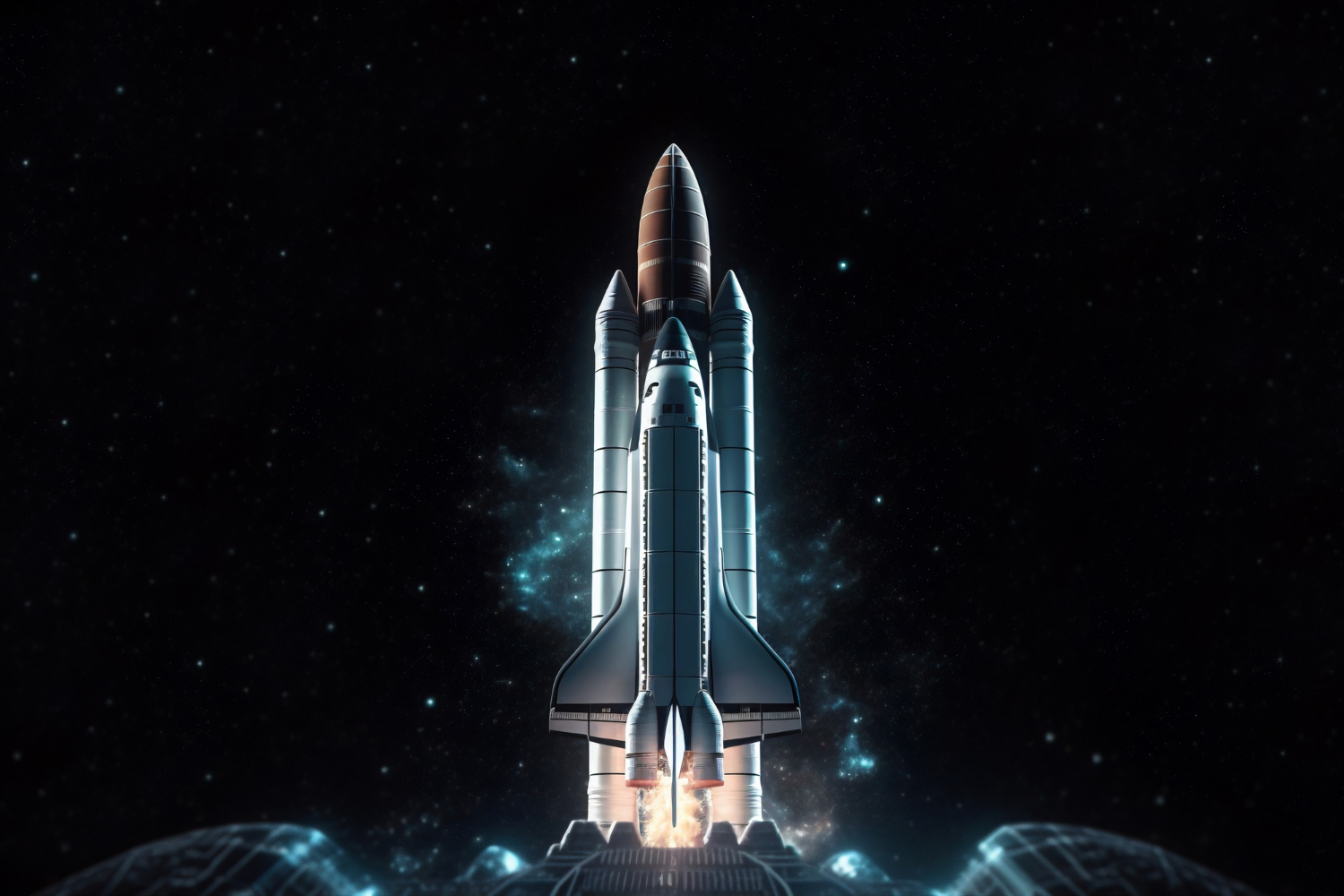
Space exploration has always been defined by precision, timing, and constant innovation. In recent years, SpaceX has been at the forefront of transforming how the world views space travel, not just through engineering breakthroughs but also through the integration of AI into its rocket launch processes. The way AI now operates within these launches has set new standards for efficiency, safety, and cost reduction. I’ve watched this evolution closely, and it’s remarkable to see how far we’ve come in leveraging machine intelligence to navigate one of the most complex scientific challenges humanity has ever faced.
The Role of AI in SpaceX’s Mission
At its core, AI serves as the silent decision-maker in countless aspects of a rocket launch. From predicting weather conditions that might delay takeoff to calculating the exact moment for stage separation, the technology manages millions of data points that would otherwise overwhelm human engineers. SpaceX has created systems that allow AI to act as a co-pilot rather than a mere assistant, giving real-time recommendations and adjusting parameters mid-flight.
This approach has changed the perception of rocket launches. It’s no longer just about human expertise guiding every move; it’s about human intelligence working hand-in-hand with AI to minimize risk and maximize performance. I find it fascinating that in an industry where even a fraction of a second can alter the outcome of a mission, the adaptability of AI has created a safety net that ensures a higher probability of success.
Predictive Maintenance and Fault Detection
One of the most significant ways AI contributes is through predictive maintenance. Every rocket contains thousands of individual components, each of which could potentially cause a failure. Human inspection alone is not enough to guarantee perfection, and even the smallest overlooked detail can result in disaster. With AI, SpaceX has the ability to analyze component health through data collected during tests and simulations.
The system learns patterns of wear and tear and flags anomalies before they develop into critical issues. This capability has drastically reduced the chance of malfunctions mid-flight. Instead of relying solely on scheduled maintenance, SpaceX can now service rockets based on real-time performance data. For reusable rockets like the Falcon 9, this has been revolutionary because it ensures that each launch is safer and more reliable without excessive delays between missions.
Trajectory Optimization
Another area where AI shines is trajectory optimization. The process of launching a rocket into orbit involves calculating complex flight paths that depend on variables such as atmospheric pressure, gravitational pull, and engine performance. In the past, these calculations relied heavily on pre-programmed models, leaving little room for adaptation once the rocket left the ground.
AI has changed that by processing live data during flight. SpaceX can adjust a rocket’s trajectory on the fly to account for unexpected conditions. For example, if winds at a certain altitude differ from forecasts, the system recalculates in real-time and alters the rocket’s angle to maintain efficiency. This has led to fuel savings, more precise satellite deployments, and smoother landings for reusable boosters.
Reusability and Landing Precision
Perhaps the most iconic achievement of SpaceX has been the successful landing of reusable boosters. This feat would not have been possible without AI. Landing a 14-story rocket vertically on a small ocean platform or landing pad requires absolute precision, something humans alone cannot achieve consistently.
AI systems handle the task by making micro-adjustments to the rocket’s descent using data from sensors, cameras, and gyroscopes. These adjustments occur hundreds of times per second, ensuring the rocket maintains stability and lands softly. Watching those boosters touch down feels almost surreal, and it’s a direct testament to how AI has revolutionized reusability in space exploration.
Cost Reduction Through Automation
Space exploration has historically been an expensive endeavor, often restricted to government agencies with enormous budgets. SpaceX disrupted this model, in part by embracing AI-driven automation. By reducing the reliance on manual operations and minimizing errors, the company has cut down costs dramatically.
Automation has also streamlined mission planning. AI handles everything from calculating fuel loads to simulating potential outcomes based on various launch scenarios. This not only reduces the number of resources required but also speeds up the preparation process, allowing for more frequent launches.
Weather Prediction and Launch Windows
Another factor that plays a major role in successful launches is weather. Traditional forecasting methods can give a general picture, but they often lack the precision needed for a launch window. AI has allowed SpaceX to analyze vast datasets from satellites, sensors, and climate models to generate highly accurate predictions.
This level of forecasting ensures that launches take place under the best possible conditions, minimizing delays and reducing the risks of weather-related complications. I’ve noticed how AI-driven weather models often outperform traditional methods, giving SpaceX a competitive edge in adhering to tight schedules.
Human and Machine Collaboration
What stands out most to me is how SpaceX balances human expertise with AI decision-making. The engineers and mission directors are still very much in control, but they use AI as a partner rather than a subordinate. This collaboration creates an environment where critical decisions are supported by data-driven insights.
For instance, during launch preparations, engineers consult AI models to verify their assumptions. In case of discrepancies, they can review the reasoning behind the AI’s predictions, providing transparency that ensures trust in the system. This human-machine partnership embodies the future of aerospace innovation.
The Role of AI in SpaceX’s Starship Project
SpaceX’s ambitions extend beyond Earth orbit, with the Starship project aiming to transport humans to Mars. AI is expected to play an even greater role in this mission, as deep space travel presents challenges far more complex than low-Earth orbit flights.
For example, autonomous systems powered by AI will need to handle mid-course corrections, onboard life support monitoring, and hazard detection on planetary surfaces. The distances involved make real-time communication with Earth nearly impossible, so AI must act independently to ensure mission success. This represents a leap in responsibility for AI, moving from a supportive tool to an essential lifeline for astronauts.
Benchmark Achievements and Industry Influence
By achieving new benchmarks in safety, efficiency, and cost-effectiveness, SpaceX has influenced the entire aerospace industry. Competitors and collaborators alike are now adopting similar AI strategies, recognizing the value of intelligent automation.
The ripple effect goes beyond space travel. Many of the AI technologies developed for rockets find applications in aviation, shipping, automotive industries, and even renewable energy. Watching this cross-industry impact highlights how space exploration drives technological progress across multiple fields.
Ethical and Safety Considerations
With all these advancements, I can’t ignore the ethical and safety considerations surrounding the use of AI in critical missions. There’s always the question of how much control should be handed over to machines. While AI excels at data analysis and quick adjustments, it lacks human intuition in unpredictable scenarios.
SpaceX has addressed this by ensuring redundancies and maintaining human oversight at every stage. Still, the reliance on AI in missions involving human lives raises important discussions about accountability and trust. These conversations will only become more urgent as missions venture deeper into space.
Looking Toward the Future
I believe the integration of AI into rocket launches is only the beginning. As the technology matures, we will see even greater autonomy in spacecraft, smarter predictive systems, and more seamless collaboration between human operators and AI. SpaceX’s achievements have proven that this future is not just possible, it’s already unfolding.
The company’s success with AI is a reminder that innovation thrives when bold ideas meet practical execution. By blending engineering expertise with intelligent algorithms, SpaceX has set a precedent that will define space exploration for decades to come.
Conclusion
Watching SpaceX harness AI to optimize rocket launches has been nothing short of inspiring. From predictive maintenance to trajectory optimization and reusable booster landings, the benchmarks achieved are reshaping the aerospace industry. What once seemed like science fiction has become routine, and that transformation owes much to the silent, precise, and adaptive capabilities of AI.
As space travel becomes more ambitious, these systems will not only enhance safety and efficiency but also open doors to interplanetary exploration. The journey ahead is vast, but if the progress so far is any indication, AI will be at the heart of every milestone humanity achieves in the cosmos.
